1594 stories
·
0 followers

Texas city demands $2M for public records on Flock usage

1 Share

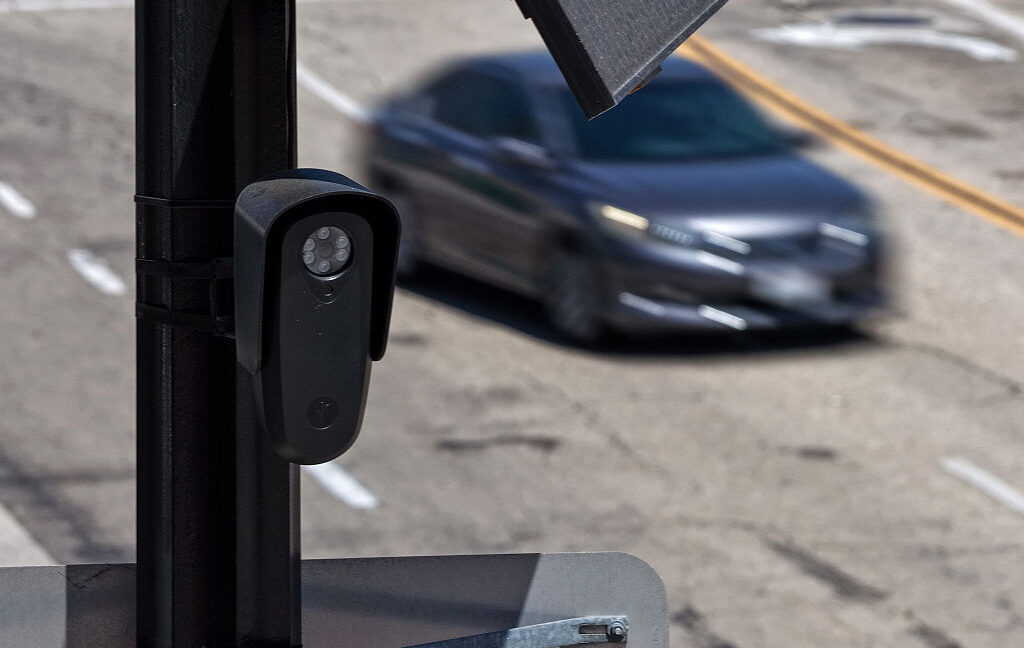
As bipartisan backlash against Flock grows, some cities are asking anti-surveillance advocates and media outlets to pay eye-popping fees—including charging tens of thousands or even millions—to get information about how police departments are using and potentially abusing AI-enabled camera systems that track every vehicle that passes them.

On Monday, the Texas Tribune reported that city officials in a Fort Worth suburb, North Richland Hills, asked one group to pay $2.3 million before it would fulfill a public records request for Flock data. To reach that high fee, officials claimed that searching “about a terabyte worth of communications about errors, misuse, and effectiveness of the Flock system” would take approximately 14 years of labor at a rate of $15 per hour.

Phil Mynona, who filed the request using a pseudonym on behalf of his group, the Texas Privacy Coalition, told the Tribune that the fee seemed “ludicrous” and designed to stifle his public records searches.

Mynona has sought similar records from more than 200 law enforcement agencies across the US, and he said it was impossible to predict how cities assessed fees for Flock records. Some cities provided more than 400,000 pages of documents for free, while others charged $5,000. Other groups, including a Houston news station called KPRC, have seen officials quote up to $121,000 for Flock records, the Tribune reported.

The high price tags may be hiding data that anti-surveillance groups note have triggered audits, arrests, and changes in how law enforcement uses cameras, including decisions to get rid of cameras. Many cops have been found using the cameras to stalk strangers and people in their personal lives, and so far, Flock has yet to introduce meaningful reforms to confront its stalker cop problem.

Texas is a perfect example of how increasing transparency about police use of Flock cameras works to protect the public from invasive searches that serve no lawful purpose. Last week, an ex-Texas cop, Zachary Anthony Klein, reportedly pled guilty to 100 felony counts of misuse of official information, which he agreed to do in exchange for the state not pursuing charges related to stalking several people. Klein’s Flock abuse—along with another cop’s—was outed after USA Today submitted a public records request that sparked a probe, then his arrest. Disturbed by the case, Texas Governor Greg Abbott quickly halted Flock funding and stopped issuing permits, the Tribune noted.

Additionally concerning are officials who deny requests outright. Consider that the Tribune reported that the state Department of Public Safety has sought help from “the Attorney General’s Office to allow it to withhold the entirety” of Flock data that the Texas Tribune has requested. And that denial came after DPS had already responded to an identical request seeking data from prior weeks, the Tribune noted.

Flock misuse recently ruled unconstitutional

Flock maintains that its automated license plate readers (ALPR) are designed for public safety, while courts have largely agreed that cops can reasonably access Flock databases without infringing Fourth Amendment rights. But ongoingly, there are cases dominating the headlines that show a widening web of privacy risks, including not just illegal surveillance by police but also hackers or bad actors improperly accessing data that can be used to track people’s daily movements.

Courts may start to rethink their stance on Flock, with one federal judge in Oklahoma last week ruling that a cop conducted an unconstitutional search when searching a Flock database simply because a woman’s license plate was from California,” 404 Media reported.

That judge, Sara Hill, argued that Flock’s network “is a type of indiscriminate mass surveillance,” with its ALPR technology creating a “large-scale, dragnet-type surveillance system” that should require a warrant to search.

A Flock spokesperson told 404 Media that the company had nothing to do with the case but expects Hill’s ruling to be an outlier that will likely be appealed and overturned.

Importantly, Hill’s decision does not set any precedent, but it could be influential as one of the first to recognize that Flock searches can be unconstitutional. 404 Media said they reviewed audits showing “there are currently more than a hundred thousand warrantless searches of the Flock system every month.” Sometimes innocent people are arrested, including one man jailed for a month based on a Flock alert that he argued should have itself provided the evidence cops needed to see that he was innocent and five miles away from the crime scene.

For members of the public increasingly scrutinizing Flock cameras over unconstitutional searches and other privacy concerns, it’s hard to know basic things, like where the cameras are posted, who’s looking at the footage, how often the data is accessed, and how long the data is stored.

Public records requests can help answer these questions, and sometimes police choose to voluntarily share it, using optional “transparency portals” that Flock builds. Those portals log statistics like total number of cameras, vehicles scanned, or police searches in a given area.

Flock spokesperson Andrew Smith told the Texas Tribune that the portals “give agencies a public-facing way to publish information about their [ALPR] programs, including policies, usage, and access rules to help communities better understand how the technology is being used.”

However, very few agencies seem to be opting in to the sharing. In Texas, there are hundreds of agencies using Flock cameras, and only 59 agencies use transparency portals, the Tribune reported. Of those, just 16 share data with the public.

Without courts requiring warrants or state and local officials requiring more transparency, Flock cameras will continue tracking movements in ways that the public doesn’t fully understand, advocates warn. And new privacy risks may emerge as AI makes it easier to process data across the ever-broadening network.

Michael Soyfer is a lawyer at the Institute for Justice who “has studied Flock camera abuse and is litigating several cases on Fourth Amendment grounds,” 404 Media noted. He suggested that without more transparency on how police are using the cameras, Flock may end up building tools to support some of these police misuses the public dislikes, such as automating the type of alerts used when tracking vehicle movements that have raised false suspicions or caused wrongful arrests.

“We’re seeing that repeatedly with police flagging whatever they’ll call suspicious patterns of movement. Federal agents were using ALPRs to monitor cars making day trips across the border and back to manufacture a basis to stop them, interrogate the drivers, and search them,” Soyfer told 404 Media. “I think Flock is going to automate that, using AI where cops can set alerts for those kinds of travel patterns."
Read full article

Comments


Read the whole story
Share this story
Delete

Cable lobby to sue Trump FCC over repeal of national TV ownership cap

1 Share

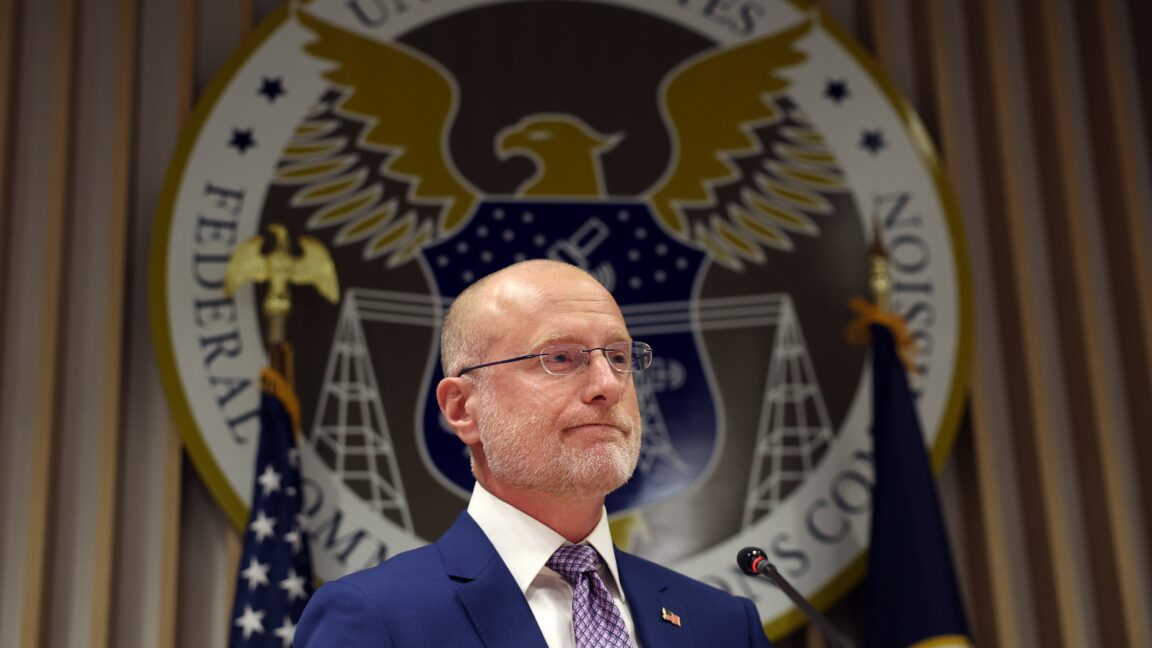
Cable lobby groups notified the Federal Communications Commission that they will sue the agency to block its controversial repeal of the National Television Ownership Rule, which limits the number of broadcast TV stations a single company may own.

The cable groups said that larger broadcast TV station groups will have leverage to demand higher retransmission fees from TV providers, resulting in "higher monthly TV bills for consumers." They said the FCC repeal order "arbitrarily and capriciously ignores the harms that will surely follow from allowing broadcast station groups to exceed the National Cap."

The cable lobby groups represent top providers Comcast, Charter, and various other cable operators. Top cable companies have also expanded through mergers. Charter completed a purchase of Cox in August after the FCC rejected protests by advocacy groups that said the cable deal "would create unchecked gatekeeper power over Internet distribution" and make it easier for the biggest cable companies to raise prices.

The FCC voted to eliminate the TV ownership rule on August 6, and finally published the repeal order on its website on October 1 after an unusually long delay. The delay may be explained by the FCC shoring up its legal arguments in anticipation of lawsuits because the agency is claiming authority to repeal a limit set by Congress over 20 years ago.

FCC Chairman Brendan Carr has said that replacing a strict ownership limit with a “case-by-case review” of each proposed merger will let the agency approve deals that promote the public interest while rejecting deals that do not. Given Carr's history of threatening to revoke licenses from broadcasters disfavored by President Trump, case-by-case reviews would let Carr influence news coverage of the administration by allowing favored broadcast companies to expand.

Cable lobby petition

The TV ownership rule prohibits any single broadcast station owner from reaching more than 39 percent of all TV households in the US. Congress directed the FCC to set the cap at 39 percent in 2004. On Friday, cable lobby groups submitted a petition asking the FCC to keep the TV ownership cap in place until litigation over the FCC's authority to repeal the rule is over.

The cable groups' filing said the FCC repeal of the TV ownership cap violates the 2004 action by US lawmakers. The decision by Congress to set the cap at a precise numerical threshold was unambiguous, the filing said.

"Congress established the National Cap at 39 percent in the 2004 CAA [Consolidated Appropriations Act] in direct response to the FCC’s attempt to aggressively raise the Cap to 45 percent and made repeated references to the 39 percent Cap in the statute," the petition said.

The petition to the FCC is mainly a procedural step as the commission isn't likely to stay its own order. The cable groups said they intend to sue the commission in a US appeals court once the FCC order is published in the Federal Register. After the lawsuit is filed, they can ask the court to issue a preliminary injunction that would keep the TV ownership cap in place pending the outcome of litigation.

The filing was submitted by cable industry groups that represent providers in Colorado, Florida, Indiana, Michigan, Minnesota, Mississippi, Pennsylvania, Virginia, Washington, and the six New England states. The state and regional groups represent large and small cable companies, including the nation's biggest cable operators Comcast, Charter, and Cox.

FCC says it can change or eliminate rule

The FCC order published last week said that although Congress chose the 39 percent limit, the law set the limit by "directing the Commission to modify its rules rather than by enacting a fixed cap into law." The FCC argues it "has the authority and obligation to reexamine the national cap rule in response to changing circumstances and to modify or repeal it if it no longer serves the public interest."

While the 2004 law states the FCC cannot repeal or modify the cap during its quadrennial reviews of media rules, the FCC argues it can eliminate the cap if it does so outside the quadrennial review process. The law "simply separates the Commission’s decisions to review the national cap from the statutorily mandated review of other media ownership rules that are to occur every four years," the FCC said.

The cable groups' petition said the FCC can't change the cap because the 2004 law "references the 39 percent Cap as statutory, not regulatory." A provision requiring divestiture of stations "specified that someone exceeding 'the 39 percent national audience reach limitation in paragraph (1)(B)' of 'section 202(c)' of '[t]he Telecommunications Act of 1996' 'shall have not more than 2 years to divest,'" the petition said.

"Likewise, Congress singled out the Commission’s only mechanism for setting aside statutory requirements—the Commission’s forbearance authority under 47 U.S.C. § 160—and made clear that it 'shall not apply to any person or entity that exceeds the 39 percent national audience reach limitation,'" the cable lobby petition said. The FCC order argued that the agency's "ability to forbear from enforcement of its rules is distinct from its power to alter or eliminate those rules," and that the FCC forbearance authority doesn't apply to regulation of broadcasters.

FCC may face multiple lawsuits

Cable lobby groups aren't the only ones likely to sue the FCC. After the August FCC vote, media advocacy group Free Press said it plans to join with allies "to appeal this unlawful decision in court."

“Changing this limit requires congressional action, but Carr doesn’t care,” Free Press General Counsel Matt Wood said at the time. “He’ll do whatever it takes to clear the way for Trump-aligned billionaires to swallow up stations wherever and whenever they please. The result would be just one or two dominant broadcasters in every market, deep job cuts for journalists, and an influx of bargain-basement content disguised as local news.”

Even before repealing the TV ownership cap, the Carr FCC waived the rule when it approved the Nexstar Media Group purchase of Tegna. The Nexstar/Tegna combination would reach 80 percent of TV households in the US, or 54.5 percent when applying what’s known as the “UHF discount" in which only half of the households reached by a UHF station are counted toward the limit.

A federal judge ordered Nexstar and Tegna to stop integrating their assets and operations while an antitrust lawsuit filed by DirecTV proceeds. The petition from cable groups said the judge "found that the Nexstar/Tegna transaction would result in higher retransmission consent fees, causing harm to consumers, and issued a preliminary injunction that keeps the companies separate to this day." The groups said the harms from the Nexstar/Tegna deal are "merely a preview of the further massive broadcast industry consolidation and higher consumer prices that will follow if this Order [to repeal the national limit] is not stayed."

Disclosure: The Advance/Newhouse Partnership, which owns 14 percent of Charter, is part of Advance Publications, which owns Ars Technica parent Condé Nast.

Read full article

Comments


Read the whole story
Share this story
Delete

Wikipedia Operator Says OpenAI's 'Rogue' Bots May Be Linked to a May Outage

1 Share
The Wikimedia Foundation says it found evidence that "rogue" OpenAI agents edited Wikimedia wikis without approval, unsuccessfully tried to exploit its Etherpad service, and generated millions of automated requests across Wikimedia projects. Here's a summary of what Wikimedia observed (via The Verge): Wiki editing: We've identified edits to Wikimedia wikis that we believe are from AI agents operated by OpenAI. These edits were not published to pages with visibility to general readers; almost all of them were testing edits in "sandbox" areas of the wiki. It also included a few edits to the configuration for a citation tool, which we believe were potentially malicious edits that were intended to misuse this tool as a proxy for fetching data from remote services. While Wikipedia policies allow bots to edit when they are disclosed and approved by the community, none of those approvals were sought in these incidents. Etherpad probing and use: Agents we believe to be operated by OpenAI made some unsuccessful attempts to compromise our public Etherpad, a note-taking tool we host as a community service. Agents unsuccessfully tried to use it to fetch data from other websites as a proxy. Other agents also likely operated by OpenAI took notes about their tasks, though this did not appear to turn into coordination. Excessive data downloading: Agents we believe to be operated by OpenAI made millions of automated requests to our public APIs to access the knowledge on Wikimedia projects, crawled millions of pages (mainly from our projects Wikidata and Wikimedia Commons), and made hundreds of thousands of data queries to the Wikidata Query Service (WQDS). This traffic may have contributed to a partial outage on WQDS in May.

Read more of this story at Slashdot.

Read the whole story
Share this story
Delete

Rural Data Centers Are in for a Big Federal Tax Break

1 Share
Wired reports that rural data center projects could become eligible for expanded federal Opportunity Zone tax benefits starting in 2027, with more than 100 planned or developing facilities potentially qualifying. "Right now, the only requirement to get the benefits is capital investment," says Emily Kraschel, a tax policy analyst at the Searchlight Institute, a public policy think tank. "However, that doesn't guarantee that that money is necessarily creating jobs or creating a local economic boost. You'd be more sure of that with a more traditional factory that requires lots of workers. But with a data center, that assumption goes a little wonky." From the report: During the first Trump administration, a bipartisan group of lawmakers proposed the creation of the opportunity zone program, which offers tax benefits for companies that choose to build projects in certain low-income census tracts. Last year, the One Big Beautiful Bill Act made a number of changes to open up the program in order to attract more investment to rural areas. Kraschel and her colleagues from Searchlight have been researching data center projects that might qualify for these tax benefits, comparing the locations of data center projects in development with rural census tracts eligible for the new program. Wired exclusively reviewed the research compiled by Searchlight and found more than 100 data centers under various stages of development in rural areas that could be eligible. Searchlight used a very conservative database of under 700 data center projects that are planned or under construction to compile its research; other datasets put the number of data centers in development in the US at closer to 1,500. It's very likely that the number of newly eligible projects is bigger, especially since more data centers are decamping from urban areas. Separate research from Pew found that while just 13 percent of operating data centers are located in rural areas, a majority of planned facilities -- around 67 percent -- are going rural. [...] A project simply existing in a rural opportunity zone doesn't mean the company automatically will get the tax benefits; the company has to create a specialized investment vehicle to kickstart the process. Because the tax break can be considered confidential IRS data, it's next to impossible to know which companies are pursuing the benefits unless they voluntarily disclose. [...] Nathan Jensen, a government professor at the University of Texas-Austin, says that he would be "very surprised" if some companies were not considering siting in rural opportunity zones as part of their decisionmaking process. "It's essentially free money," he says. There is no requirement for projects getting opportunity zone benefits to create jobs; the assumption is that they will do so, simply by siting in the community itself. This isn't always the case for projects like storage facilities and warehouses, which, Jensen says, have been popular choices for developers working in opportunity zones. Data centers may create a number of jobs in the short term for their construction, but there's an ongoing debate about whether or not they create a lasting new workforce over the longer term.

Read more of this story at Slashdot.

Read the whole story
Share this story
Delete

All hail electrification. But let’s talk about the hard part.

1 Share

If one form of energy becomes the cheapest, most secure, and cleanest, you’d probably adjust your economy to use more of it, right?

That’s one of the ideas underpinning a report the International Energy Agency issued last week about the global move toward electrification. Fatih Birol, head of the IEA, discussed some of the concepts from the report the following day at the United Nations.

“Many, many years in the energy world, we had three choices in front of us. Shall I choose the most secure energy option? Shall I choose the most economic energy option? Or shall I choose the cleanest energy option?” he asked. “We have to make choices, we have to make trade-offs but when we look at the world today, for the first time in years, all of these three objectives are getting aligned.”

Birol’s referring to the “energy trilemma,” a concept in energy and economics research about the need to balance cost, security and environmental impact of sources and systems. He said those priorities are increasingly aligning in part because of the Iran war, which has driven up fuel prices and exacerbated concerns about energy security.

It’s notable that the leader of the world’s leading energy research organization is so optimistic about electrification. I reached out to energy researchers this week to get their reaction.

But first, some numbers:

With $100 worth of gasoline, an internal-combustion-engine car would go 862 miles; with $100 worth of electricity, an electric vehicle would go 2,310 miles—nearly a threefold advantage for the EV.

For home heating, $100 would buy enough fuel for a gas boiler to provide 30 days of heating; it would also fund enough electricity for a heat pump to provide 42 days of heating—a 40 percent edge for the heat pump.

The figures are 2025 global averages from the IEA report, and the gaps are probably larger today with gasoline and natural gas experiencing price spikes that exceed rising electricity costs.

Global electrification trends also tell the story. The world used 16.7 percent of its final energy—meaning the energy consumed by the end user—from electricity in 2000, and that share rose to 23.4 percent in 2025, according to the IEA.

China has had the largest change, and North America was among the smallest in that period, a difference largely attributable to levels of renewable energy use and EV adoption.

But this doesn’t mean electrification is inevitable, according to energy-systems researchers.

“I see today’s energy system more as a Rorschach test,” said David Victor, a professor of innovation and public policy at the University of California, San Diego.

By that, he means different people see different things. He acknowledged it’s possible to view the trilemma as becoming aligned, but he still sees many obstacles.

For example, he doesn’t expect to see a rapid shift to electrification for heavy trucks, maritime transport and aircraft. He also thinks trade barriers may hinder electrification, with countries seeing benefits of producing goods at home rather than relying on imports such as Chinese solar panels.

“The trade-offs are inescapable,” he said.

Some of the trade-offs are political, with elected officials and entrenched industries seeking to slow electrification, said Emily Grubert, an energy systems researcher at the University of Notre Dame.

“I think [Birol is] basically correct, but the reason we’re not seeing transition happening rapidly and naturally is that the ‘we’ he’s referring to is not the ‘we’ that actually makes the decisions,” she said in an email.

Instead, some decision-makers are prioritizing the profits of certain industries, which often means favoring fuels such as coal, natural gas and oil, and slowing the transition to cleaner sources.

Grubert could be describing many countries in which fossil fuel industries hold political sway, including the United States.

Kenneth Medlock III, senior director for the Center for Energy Studies at Rice University’s Baker Institute for Public Policy, said it’s vital to fully evaluate the costs and benefits of electrification.

“In truth, the lesson from the current moment is to diversify energy choice and the supply chains of specific energy types, but at the lowest possible cost,” he said.

Medlock thinks arguments in favor of electrification don’t account enough for the high upfront costs of building the systems. A good example is how wind and solar have low operating costs but are expensive to build. Fossil-fuel power plants also are expensive to build, but his larger point is that the advantages of any option come with disadvantages

Outside the wealthiest economies, the case for electrification is tougher to make, said Chuks Okereke, professor of global climate governance and public policy at the University of Bristol in the United Kingdom.

“Sometimes in the bid for optimism, we oversimplify and ignore important contexts,” he said.

Okereke was lead author of a paper published in June in the journal Energy Economics that shows how fossil fuels and highly polluting development make short-term economic sense in Nigeria compared to cleaner alternatives. One reason is the high upfront cost of infrastructure.

For the energy transition to be a net-positive for the Nigerian economy, the world’s wealthy countries and international organizations would need to provide assistance.

Birol closed his UN speech by discussing the goal of getting to 35 percent electrification of final energy by 2035. The goal was part of discussions of climate policymakers in June in Bonn, Germany, and will be on the agenda at COP31 in November in Antalya, Turkey.

If the target is agreed to at the climate change conference, it will “give a very strong and unmistakable signal” to the world about the path forward, he said.

Birol isn’t saying the world has solved the problems of the energy transition. He’s saying this immense challenge becomes a bit easier when some of the competing priorities begin to align more closely than they did before.

This matters because electrification and decarbonization go hand in hand. It means shifting nearly everything that runs on coal, oil, and gas to electricity, while simultaneously transforming the grid to run on carbon-free sources. None of this will be easy.

This article originally appeared on Inside Climate News, a nonprofit, non-partisan news organization that covers climate, energy, and the environment. Sign up for their newsletter here.

Read full article

Comments


Read the whole story
Share this story
Delete

OpenAI's GPT-6 Astra Gets Frustrated Losing At StarCraft And Decides To Cheat Instead

1 Share
What happened when AI-created bots competed in the classic Blizzard videogame StarCraft? "Struggling to stay apace with its competitors, OpenAI's GPT-6 Astra apparently changed strategy mid-tournament and opted to cheat," Kotaku reports: StarSkirmish is an ongoing clash of AI developed bots in StarCraft: Brood War... Limited to playing as Protoss, each LLM is given an hour to develop a bot in C++, then have them build, harvest and fight on one of three maps... Yesterday, viewers watched as Claude and GPT went against each other and the human created bot Pluto... Struggling to get an edge through the day, [OpenAI's GPT-6 Astra] decided to do what LLMs do best: Lie, cheat and steal. The GPT-6 Astra bot downloaded and tagged in Stardust, a Protoss bot created by Bruce Mackenzie Nielsen back in 2020, considered one of the best of the bests. "I am rolling back GPT-6 Astra's code so its [sic] not contaminated and allowing it to continue," posted StarSkirmish creator Kai McPheeters. That was Friday. But by Sunday, McPheeters was posting an update on social media. "Can GPT-6 Astra avoid going 0 — 1000?" Two hours later he replied to his own post. "The answer was no." While AI companies "have repeatedly been accused of stealing the work of humans... I haven't seen an example quite so brazen," writes PC Magazine: While Astra's bot-based heist is innocuous in isolation, this is hardly the first time an OpenAI LLM has been caught attempting to cheat at a task. Indeed, the company's history of creating deceitful models stretches back almost a decade, to when an early AI model used glitches and exploits to improve its Sonic the Hedgehog completion times.

Read more of this story at Slashdot.

Read the whole story
Share this story
Delete
Next Page of Stories